
שפעה וירק: גנים ופריחה ביצירתו של קלוד מונה | Abundance and Verdure: Gardens and Blossoms in the Art of Claude Monet | Abondance et Verdure : Jardins et Floraisons chez Claude Monet
שפעה וירק: גנים ופריחה ביצירתו של קלוד מונה
מעטים האמנים שנקשרו אל עולם הצומח והגן כפי שנקשר אליו קלוד מונה (1840-1926). לאורך עשרות שנים שב האמן אל גנים, עצים, פרחים, שדות ובריכות מים, עד שהטבע עצמו נעשה לנושאה המרכזי של יצירתו.
כאחד ממובילי האימפרסיוניזם, ביקש מונה ללכוד בציוריו את הרושם החולף שמותירים האור והאווירה על העין האנושית. משיחות מכחול חופשיות וצבעוניות עשירה מעניקות ליצירותיו תחושה של חיים ותנועה, כאילו העלים נעים ברוח והאור מהבהב על פני המים.
התערוכה עוקבת אחר מסעו של מונה בעקבות יופיו של עולם הצומח – מן הגנים הביתיים שצייר בארז’נטיי ובוֵתיי ועד לגן המפורסם שעיצב בז’יברני, אשר הפך לאחת מיצירות חייו הגדולות. ביצירותיו מתגלה אהבה עמוקה לטבע, המתואר לא כרקע בלבד, אלא כעולם חי, שופע ומלא פליאה.
דרך עצי פרי בפריחה, שדות פרגים, ערוגות צבעוניות, גשרים, בריכות נימפאות והשתקפויות אור, מזמינה התערוכה להתבונן במבטו הייחודי של מונה – מבט שגילה ביופיים של הדברים הפשוטים את השפע, ההתחדשות וקסמו המתמיד של הטבע.
משך סרט התערוכה: 38 דקות ו- 42 שניות.
התערוכה מלווה ביצירות לפסנתר מאת קלוד דביסי.
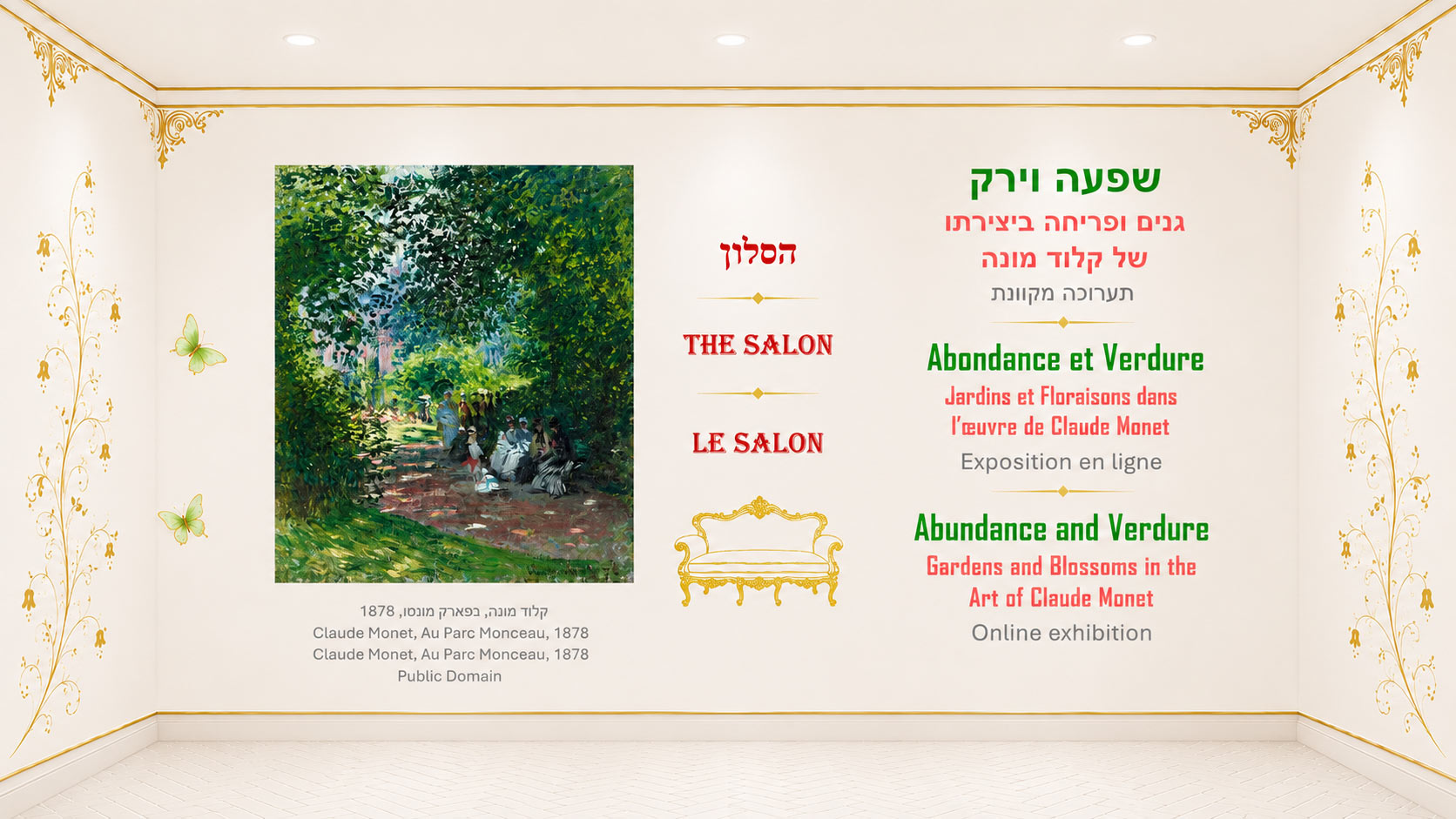
כל היצירות בתערוכה מהפנטות בדרכן. הנה אחת מהן, הפותחת צוהר אל עולמה של התערוכה:
כל הזכויות שמורות לד”ר נאוה סביליה שדה © 2025
אין להעתיק, לצלם, לתעד, להציג, להפיץ, להעביר או לעשות שימוש כלשהו בחומר המוצג, בין מסחרי ובין אם לאו, זאת בכל אמצעי מדיה שהוא, בין בחלקים ובין בשלמות.
לצפייה אישית בלבד. אין להציג, להקרין או להשמיע בפני קהל.
Abundance and Verdure: Gardens and Blossoms in the Art of Claude Monet
Few artists have been as closely associated with the world of plants and gardens as Claude Monet (1840-1926). For decades, the artist returned time and again to gardens, trees, flowers, fields, and ponds, until nature itself became the central subject of his work.
As one of the leading figures of Impressionism, Monet sought to capture the fleeting impression that light and atmosphere leave upon the human eye. His free brushstrokes and rich palette imbue his paintings with a sense of life and movement, as though leaves were stirring in the breeze and light were shimmering across the water.
This exhibition follows Monet’s journey through the beauty of the natural world – from the domestic gardens he painted in Argenteuil and Vétheuil to the celebrated garden he created at Giverny, which became one of the great achievements of his life. His works reveal a profound love of nature, portrayed not merely as a backdrop but as a living, abundant, and wonder-filled world.
Through blossoming fruit trees, poppy fields, vibrant flower beds, bridges, water-lily ponds, and luminous reflections, the exhibition invites viewers to discover Monet’s unique vision – a vision that found abundance, renewal, and the enduring enchantment of nature in the beauty of the simplest things.
Exhibition film duration: 38:42.
The exhibition is accompanied by piano works by Claude Debussy.
Every work in this exhibition is captivating in its own way. Here is one of them, opening a window onto the world of the exhibition:
All rights reserved to Dr. Nava Sevilla Sadeh©2025
It is prohibited to copy, photograph, document, display, distribute, transfer, or make any use whatsoever of the presented material, whether commercial or not, in any form of media, either in part or in full. For personal viewing only. Public display, screening, or presentation is prohibited.
Abondance et Verdure : Jardins et Floraisons chez Claude Monet
Peu d’artistes ont été aussi étroitement liés à l’univers des plantes et des jardins que Claude Monet (1840-1926). Pendant plusieurs décennies, l’artiste est revenu sans cesse aux jardins, aux arbres, aux fleurs, aux champs et aux bassins, jusqu’à faire de la nature elle-même le sujet central de son œuvre.
Figure majeure de l’impressionnisme, Monet chercha à saisir dans ses tableaux l’impression fugitive que la lumière et l’atmosphère laissent sur l’œil humain. Ses touches libres et sa palette riche confèrent à ses œuvres une sensation de vie et de mouvement, comme si les feuilles frémissaient sous le vent et que la lumière scintillait à la surface de l’eau.
L’exposition retrace le parcours de Monet à la recherche de la beauté du monde végétal, depuis les jardins domestiques qu’il peignit à Argenteuil et à Vétheuil jusqu’au célèbre jardin qu’il créa à Giverny, devenu l’une des grandes œuvres de sa vie. Ses peintures révèlent un amour profond de la nature, représentée non comme un simple décor, mais comme un monde vivant, luxuriant et empreint d’émerveillement.
À travers les arbres fruitiers en fleurs, les champs de coquelicots, les parterres colorés, les ponts, les bassins de nymphéas et les jeux de reflets lumineux, l’exposition invite à découvrir le regard singulier de Monet – un regard qui sut reconnaître dans la beauté des choses les plus simples l’abondance, le renouveau et le charme intemporel de la nature.
Durée du film de l’exposition : 38 min 42 s.
L’exposition est accompagnée d’œuvres pour piano de Claude Debussy.
Toutes les œuvres de cette exposition fascinent à leur manière. En voici une, qui ouvre une fenêtre sur l’univers de l’exposition :
Tous droits réservés à Dr. Nava Sevilla Sadeh©2025
Il est interdit de copier, photographier, documenter, présenter, distribuer, transmettre ou faire tout usage quelconque du matériel présenté, à des fins commerciales ou non, sous quelque forme de média que ce soit, en partie ou en totalité. Réservé à un usage personnel. Toute diffusion, projection ou présentation publique est interdite.