
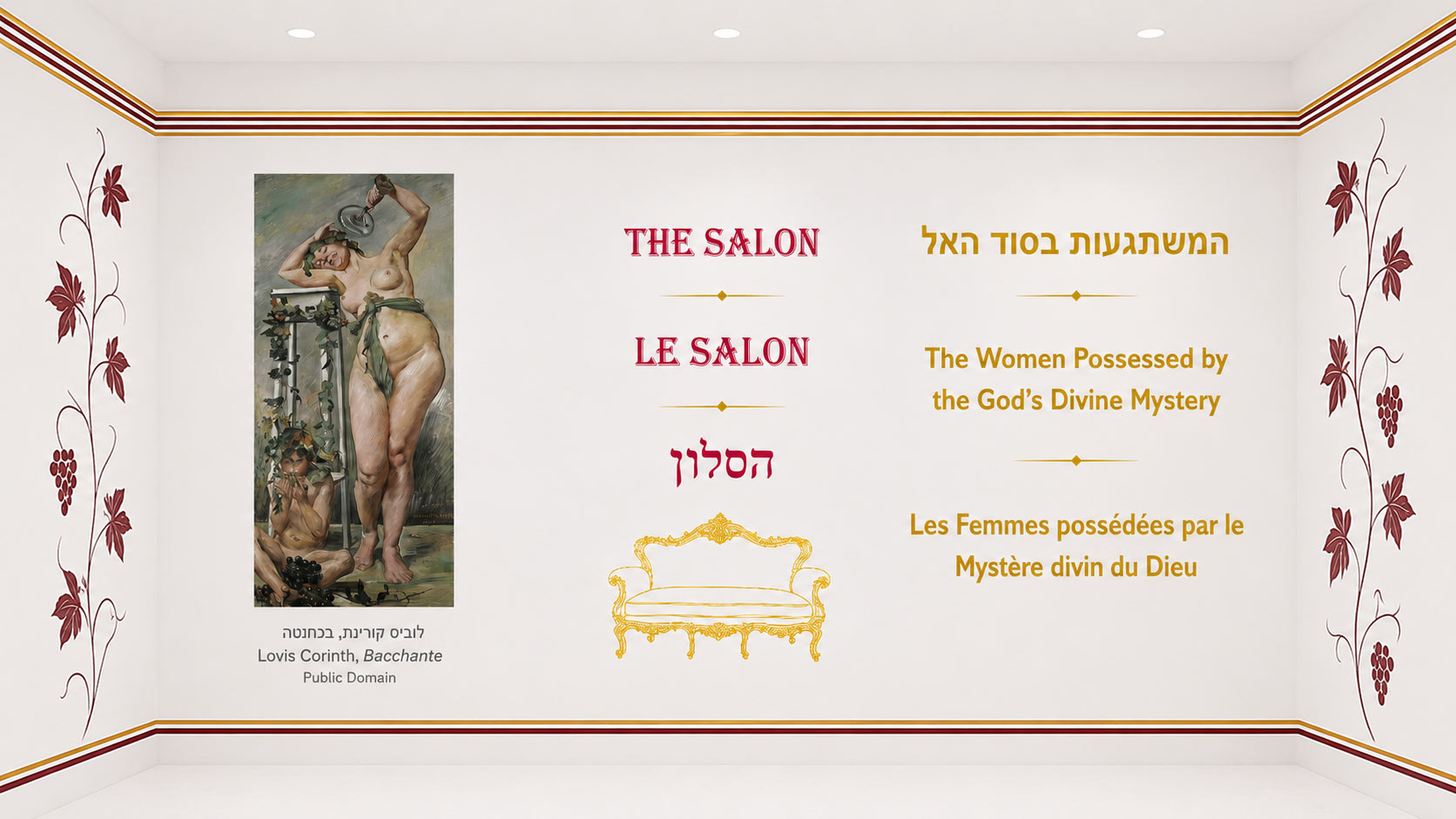
המשתגעות בסוד האל | The Women Possessed by the God’s Divine Mystery | Les Femmes possédées par le Mystère divin du Dieu
מי הן הנשים המופיעות בציורי כדים יווניים עתיקים ובציור האירופי, כשהן חוגגות בין שריגי גפנים וקיסוס, אוחזות במוט מוזר ועוטות עור נמר?
אמני המאות ה-18 וה-19 אהבו לתאר דמויות אלו גם כנשים יפהפיות השרועות בעירום בטבע בעודן רדומות, בעוד מסביבן מתהוללים בצחוק פרוע יצורים חצי אנושיים וחצי חייתיים.
לצופה בן זמננו נדמה לעיתים כי זוהי דמותה של ונוס, אלת היופי והאהבה, אולם אלה הן למעשה המיינאדות, או הבכחנטות – מלוותיו של דיוניסוס, אל היין, השיכרון, התאווה וההוללות.
מי היו המאינדות? תערוכה זו מזמינה לחוויה אסתטית ותרבותית בעקבות המיינאדות (הבכחנטות) ביצירות אמנות מן העולם היווני והרומי ועד לאמנות האירופית של המאות ה-17, ה-18 וה-19. מבחר עשיר של ציורים, פסלים, פסיפסים וכלי חרס עתיקים חושף עולם של מסתורין, חירות, תשוקה, התעלות רוחנית ועוצמה נשית.
בין יערותיו של דיוניסוס לבין אולמות האמנות האירופית, מתגלה דמות המיינאדה כסמל לכמיהתו הנצחית של האדם לפרוץ את גבולות היומיום ולגעת, ולו לרגע, בסוד האל.
היצירות מוצגות בחללי תצוגה ייחודיים ומעודנים בעיצוב מקורי, התואמים את רוח התערוכה ונוצרו במיוחד עבורה כחלק מחוויה אסתטית שלמה.
כל הזכויות שמורות לד”ר נאוה סביליה שדה © 2025
אין להעתיק, לצלם, לתעד, להציג, להפיץ, להעביר או לעשות שימוש כלשהו בחומר המוצג, בין מסחרי ובין אם לאו, זאת בכל אמצעי מדיה שהוא, בין בחלקים ובין בשלמות.
לצפייה אישית בלבד. אין להציג, להקרין או להשמיע בפני קהל.
בהשתתפות (לפי סדר הופעת האמנים):
ג׳ון קולייר
חואקין סורויה
הרמונקס
מקס נוננברוך
צייר דוטוויט
ארתור האקר
צייר בת ניובה
פסלים לא ידועים מהתקופה ההלניסטית
הנדריק טר ברוגן
הרמן ואן דר מיין
אמנים לא ידועים מהתקופה הרומית
אנג‘ליקה קאופמן
אמן גילוף לא ידוע מתקופת הרנסנס
אליזבת ויז‘ה לה ברון
אנגלברט גובל
פיודור ברוני
אלכסנדר קוציס
יוג‘ין פליקס
יאן ואן בירס
הנריק פיאטקובסקי
אלכסיי ונציאנוב
אמיל באס
ז‘אק אנטואן ואלן
אמני פסיפס רומיים לא ידועים
ויליאם–אדולף בוגרו
שארל–אמדה–פיליפ ואן לו
כריסטיאן ברנהרד רודה
קונסטנטין מקובסקי
לורנס אלמה טדמה
אנני לואיזה סווינרטון
שארל ז‘וזף נטואר
ז‘אן–בטיסט גרוז
פרדריק לייטון
ציירבריגוס
גיולה בנקזור
לוביס קורינת
מירון
אנרי ג‘רווקס
צייר אדיפוס
איזבל ליליאן גלואג
ויקטור מיריי דה לימה
בנין גניירו
יעקב יורדנס
היירון
מקרון
אלסנדרו רוסי
ג‘ובני בנדטו קסטיליונה
שארל גלייר
ציירדינוס
אנדריס קורנליס לנס
ז‘אן–סימון ברתלמי
אלכסנדר אובלסקי
סבסטיאנו ריצ‘י
חואן לאון פאלייר
הרברט ג‘יימס דרייפר
דיוסקורו פואבלה
ז‘אן–בפטיסט–קמיל קורו
ויז‘ה לברון
אדולף אלכסנדר לסרל
קארולי לוץ
גוסטב קורבה
לואי ז‘אק ניקולס שאל ז‘רארד דה לארס
ז‘אן אונורה פרגונר
פול מרווארט
ויטולד פרושקובסקי
שארל מיינייה
יוג‘ין דלקרואה
קארולי ברוקי
The Women Possessed by the God’s Divine Mystery
Who are the women who appear on ancient Greek vase paintings and in European art, celebrating among vine and ivy tendrils, holding a strange staff and clad in leopard skins?
Artists of the eighteenth and nineteenth centuries also delighted in portraying these figures as beautiful women reclining nude in nature while asleep, surrounded by half-human, half-animal creatures frolicking in wild laughter.
To the modern viewer, they may at times appear to be representations of Venus, the goddess of beauty and love. In reality, however, they are the Maenads, or Bacchantes – the companions of Dionysus, the god of wine, intoxication, desire, and revelry.
Who were the Maenads? This exhibition invites visitors to an aesthetic and cultural journey through representations of the Maenads (Bacchantes), from the Greek and Roman worlds to European art of the seventeenth, eighteenth, and nineteenth centuries. A rich selection of paintings, sculptures, mosaics, and ancient ceramic vessels reveals a world of mystery, freedom, passion, spiritual exaltation, and feminine power. Between the forests of Dionysus and the galleries of European art, the figure of the Maenad emerges as a symbol of humanity’s eternal longing to transcend the boundaries of everyday life and, if only for a moment, touch the secret of the divine.
The artworks are presented within unique and refined exhibition spaces of original design, created especially for this exhibition and conceived in harmony with its spirit as part of a complete aesthetic experience.
All rights reserved to Dr. Nava Sevilla Sadeh © 2025
It is prohibited to copy, photograph, document, display, distribute, transfer, or make any use whatsoever of the presented material, whether commercial or not, in any form of media, either in part or in full.
For personal viewing only. Public display, screening, or presentation is prohibited.
Les Femmes possédées par le Mystère divin du Dieu
Qui sont ces femmes qui apparaissent sur les vases grecs antiques et dans la peinture européenne, célébrant parmi les sarments de vigne et le lierre, tenant un étrange bâton et vêtues de peaux de léopard ?
Les artistes des XVIIIe et XIXe siècles ont également aimé représenter ces figures sous les traits de belles femmes nues, allongées dans la nature et plongées dans le sommeil, tandis qu’autour d’elles s’ébattent dans un rire déchaîné des créatures mi-humaines, mi-animales. Pour le spectateur contemporain, elles peuvent parfois évoquer Vénus, déesse de la beauté et de l’amour. Pourtant, il s’agit en réalité des Ménades, ou Bacchantes, compagnes de Dionysos, dieu du vin, de l’ivresse, du désir et de la célébration extatique.
Qui étaient les Ménades ? Cette exposition invite à une expérience esthétique et culturelle à la découverte des Ménades (Bacchantes) dans les œuvres d’art, depuis le monde grec et romain jusqu’à l’art européen des XVIIe, XVIIIe et XIXe siècles.
Un riche ensemble de peintures, sculptures, mosaïques et céramiques antiques révèle un univers de mystère, de liberté, de passion, d’élévation spirituelle et de puissance féminine. Entre les forêts de Dionysos et les salles de l’art européen, la figure de la Ménade se révèle comme le symbole de l’aspiration éternelle de l’être humain à dépasser les limites du quotidien et à toucher, ne serait-ce qu’un instant, le secret du divin.
Les œuvres sont présentées dans des espaces d’exposition uniques et raffinés, conçus selon un design original, créés spécialement pour cette exposition et en harmonie avec son esprit, dans le cadre d’une expérience esthétique globale.
Tous droits réservés à Dr. Nava Sevilla Sadeh © 2025
Il est interdit de copier, photographier, documenter, présenter, distribuer, transmettre ou faire tout usage quelconque du matériel présenté, à des fins commerciales ou non, sous quelque forme de média que ce soit, en partie ou en totalité.
Réservé à un usage personnel.
Toute diffusion, projection ou présentation publique est interdite.
Featuring the works of (In order of appearance of the artists) / Avec la participation de (Par ordre d’apparition des artistes) :
John Collier
Joaquín Sorolla
Hermonax
Max Nonnenbruch
Dutuit Painter
Arthur Hacker
Niobid Painter
Unknown sculptors from the Hellenistic period
Hendrick ter Brugghen
Herman van der Mijn
Unknown artists from the Roman period
Angelica Kauffman
Unknown Renaissance Carving Artist
Élisabeth Vigée Le Brun
Angilbert Göbel
Fyodor Bruni
Aleksander Kotsis
Eugen Felix
Jan Van Beers
Henryk Piątkowski
Alexey Venetsianov
Emile Baes
Jacques Antoine Vallin
Unknown Roman mosaic artists
William-Adolphe Bouguereau
Charles-Amédée-Philippe van Loo
Christian Bernhard Rode
Konstantin Makovsky
Lawrence Alma Tadema
Annie Louisa Swynnerton
Charles Joseph Nettoyer
Jean-Baptiste Greuze
Frederic Leighton
Brygos Painter
Gyula Benczur
Lovis Corinth
Miron
Henri Gervex
Oedipus Painter
Isobel Lilian Gloag
Victor Meirelles de Lima
Bénigne Gagneraux
Jacob Jordaens
Hieron
Macron
Alessandro Rosi
Giovanni Benedetto Castiglione
Charles Gleyre
Dinos Painter
Andries Cornelis Lens
Jean-Simon Berthélemy
Alexandre Ubeleski
Sebastiano Ricci
Juan León Pallière
Herbert James Draper
Dióscoro Puebla
Jean-Baptiste-Camille Corot
Vigée-Lebrun
Adolphe Alexandre Lesrel
Károly Lotz
Gustave Courbet
Louis Jacques Nicolas Schaal
Gerard de Lairesse
Jean-Honoré Fragonard
Paul Merwart
Witold Pruszkowski
Charles Meynier
Eugène Delacroix
Károly Brocky